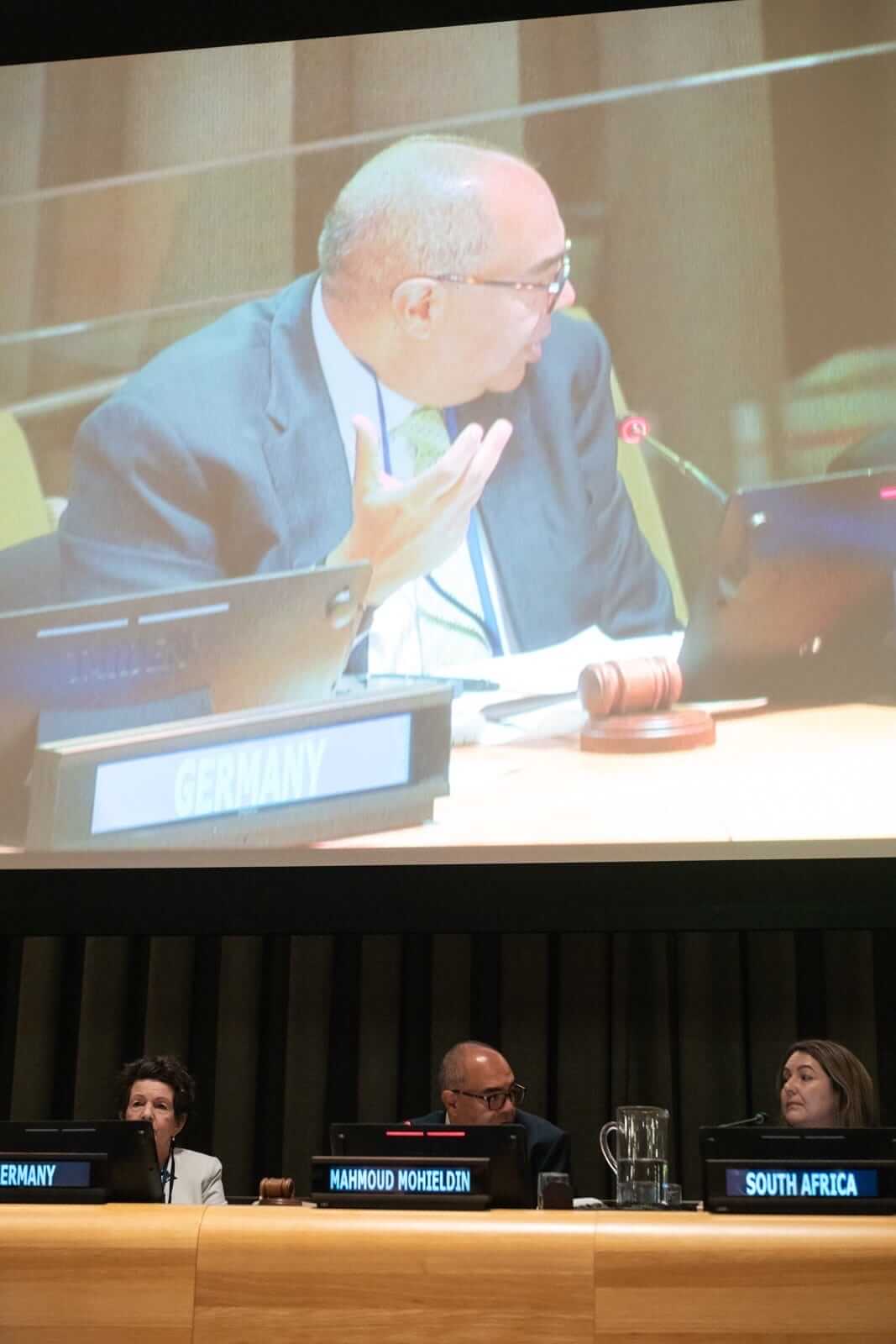

This week at the UN Financing for Development Forum, I delivered a keynote speech at the High-Level Ministerial Dialogue on the Sevilla Platform for Action.
Here are few reflections:
➡️ The core problem
The gap is not in commitments. It is in budgets and means of implementation:
“If it’s not in the budget, it doesn’t exist.”
And yet municipal finance remains an afterthought. A typical local government budget covers infrastructure and public services, environment protection, social and cultural expenditure, local economic development, urban development, civil security — and on top of that, accountability to voters and communities for schools, healthcare, social assistance, and poverty reduction. That is an enormous mandate with chronically insufficient fiscal tools to match it.
➡️ On municipal finance
The conversation has to get practical.
Property taxes, land taxes, taxes on transfer of immovable property, local sales taxes — these are local instruments that should be spent locally. In the US, property tax stays in the community.
When citizens can see that their taxes fund their school, their clinic, their street — they pay. Digitalization of local revenue systems makes this traceable. This is not a distant reform. It is available now.
➡️ On governance
Stop debating centralization vs. decentralization.
“In Egypt, we lost 50 years to that debate” — and decentralization is written into the constitution. Centralization and decentralization are means, not ends. Use the center for standard-setting, international engagement, and security. Use the local level for delivery, flexibility, and daily accountability. Call it synchronization.
Governance is not validated only by regular or occasional reports. It is validated daily:
— Is the school open?
— Is the health service delivering?
— Is the street blocked because of a broken sewage network?
These are the hourly realities mayors face — not the annual reports that sometimes have more authors than readers.
➡️ Five priorities to accelerate localized finance
1. Align national strategies with local realities — and verify that alignment in the budget, not just in words
2. Build pipelines of investable local projects — green, smart, bankable. Search “green climate projects Egypt”: over 20,000 projects across every SDG dimension, including small enterprises led by women. The private sector can lead here.
3. Strengthen data — the DNA framework (Data, Network, Architecture) remains an underused tool for aligning financial allocations with local implementation
4. Address debt constraints locally — instruments like the Borrowers Platform, debt swaps, and emerging mechanisms must have concrete implications at the local level, not just for global architecture discussions
5. Mobilize all sources of finance — public, private, blended — without waiting for the perfect global framework
➡️ Four conclusions:
1. Localization must be central — not a footnote
2. Social cohesion requires real budget empowerment at the local level
3. Speed is not optional — the window is now
4. Implement Sevilla Commitment reforms without waiting for perfect conditions — the arrangements we have today are enough to start
The Sevilla Platform for Action is moving from policy to implementation.
Localization has to move with it — and it has to be in the budget to mean anything. Many thanks to the engaging participants and Government and Local leaders for insightful contributions and to the Local2030, The Government of Spain, UN HABITAT and the OECD for convening this session.